The Barbados Museum and Historical Society article Alleyne of Barbados, by Louise Allen, states that owing to his failing health, Abel Alleyne (12) — uncle of Sir John Gay Alleyne — left Barbados in 1739 with his wife Mary and his family and moved to Braintree, now Quincy, Massachusetts, in search of a more temperate climate.
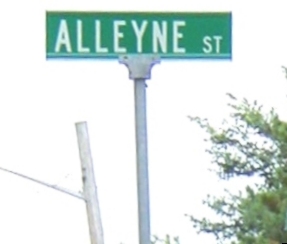
The author made a trip to Quincy to see whether any evidence remains today that the family once lived there. In the town, close to the centre, is a street called Alleyne Street. This can be no coincidence.
The vault beneath the church
Christ Church Episcopal, Quincy
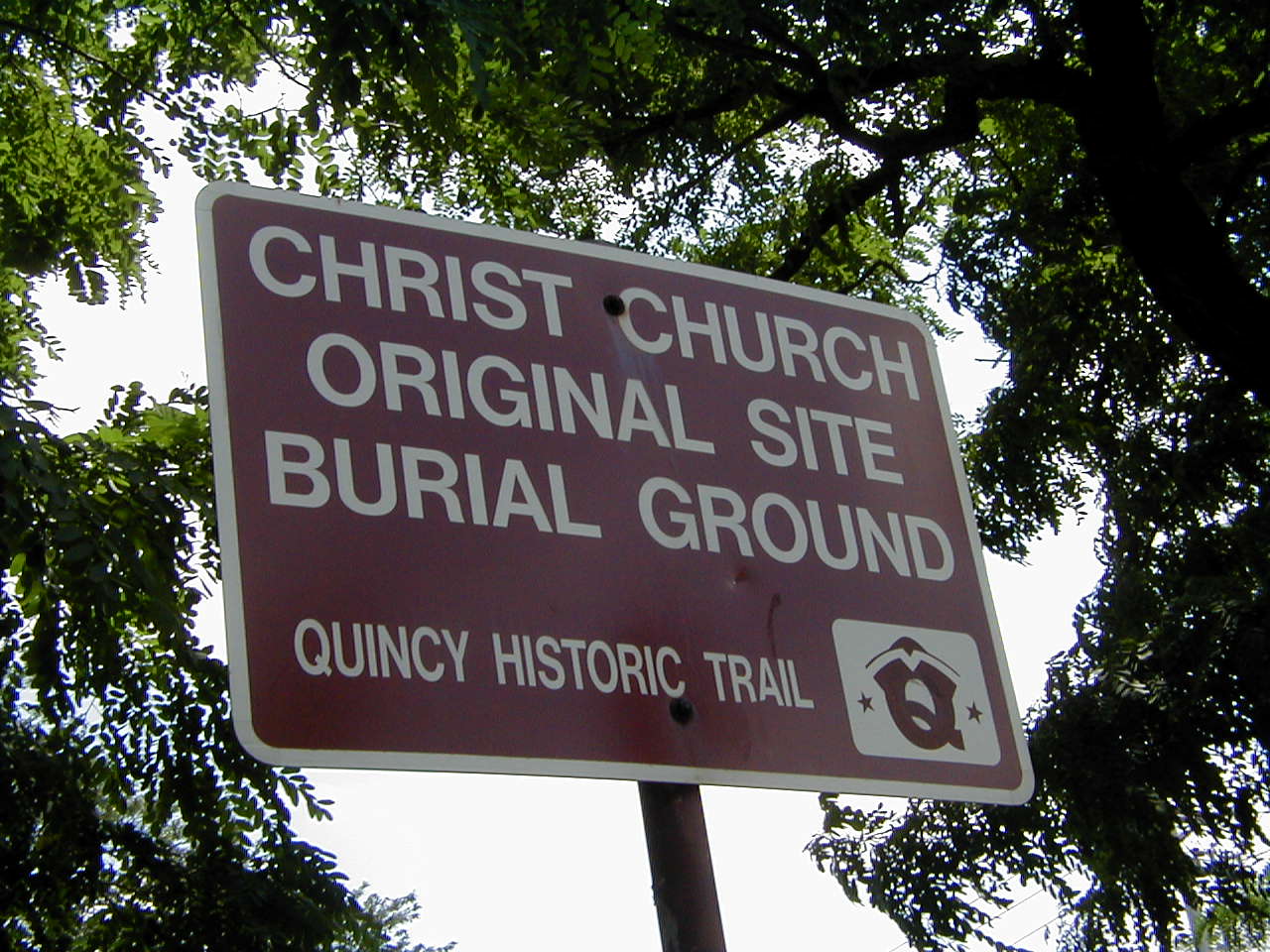
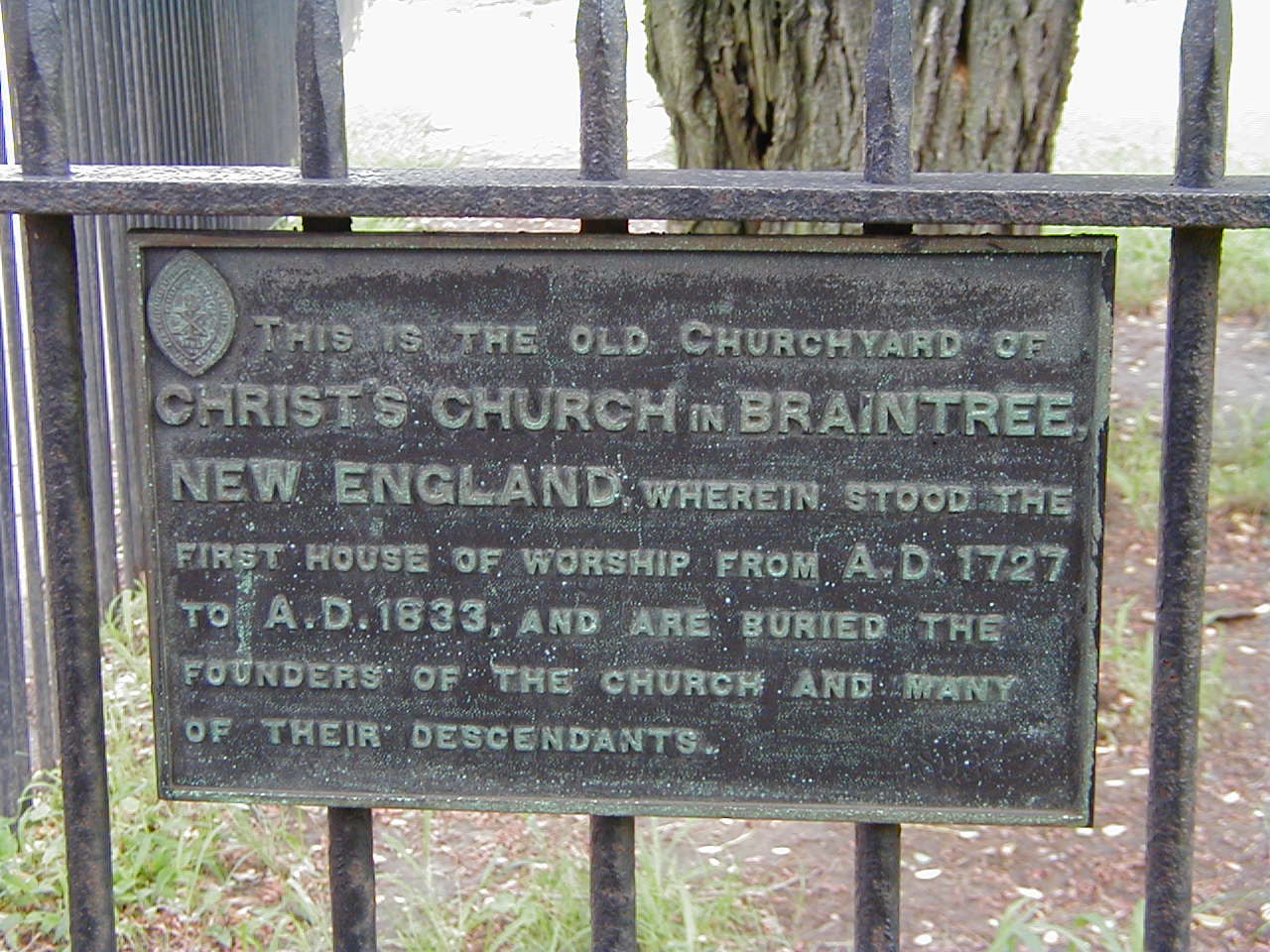
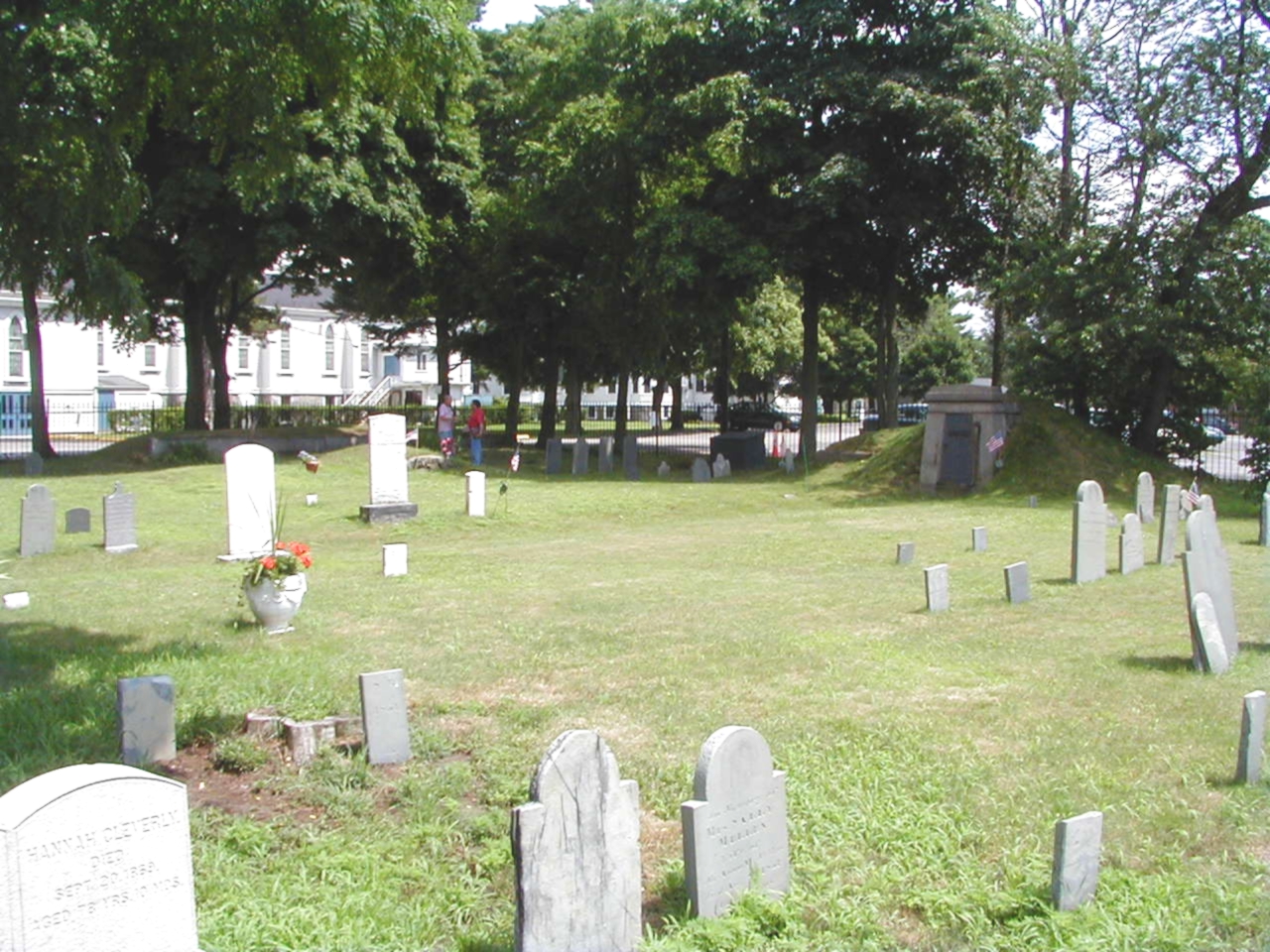
Near the town centre, at the corner of School Street and Phipps Street, is the old cemetery of Christ Church Episcopal Church. The church itself has long been demolished, but many of the graves are still there. The BMHS article states that the Alleynes had a vault beneath the church — but without the church standing, it was not possible to locate it.
Mr. Corey, historian for the Episcopal Church in Quincy, was able to locate the vault, and to show from his church records which family members were interred there. All the Alleyne records are in Volume One of the church records, showing that the Alleynes were among those who founded the church.
The Historical Society in Quincy holds a file on the Alleyne family, and in it is a letter from Jeremiah Smith Boies, Abel's cousin, listing who was interred in the vault. The letter was wrapped around the keys to the vault, and is addressed to the two sisters, Sarah (26 iv) and Dorothy Deborah Forster (26 i).
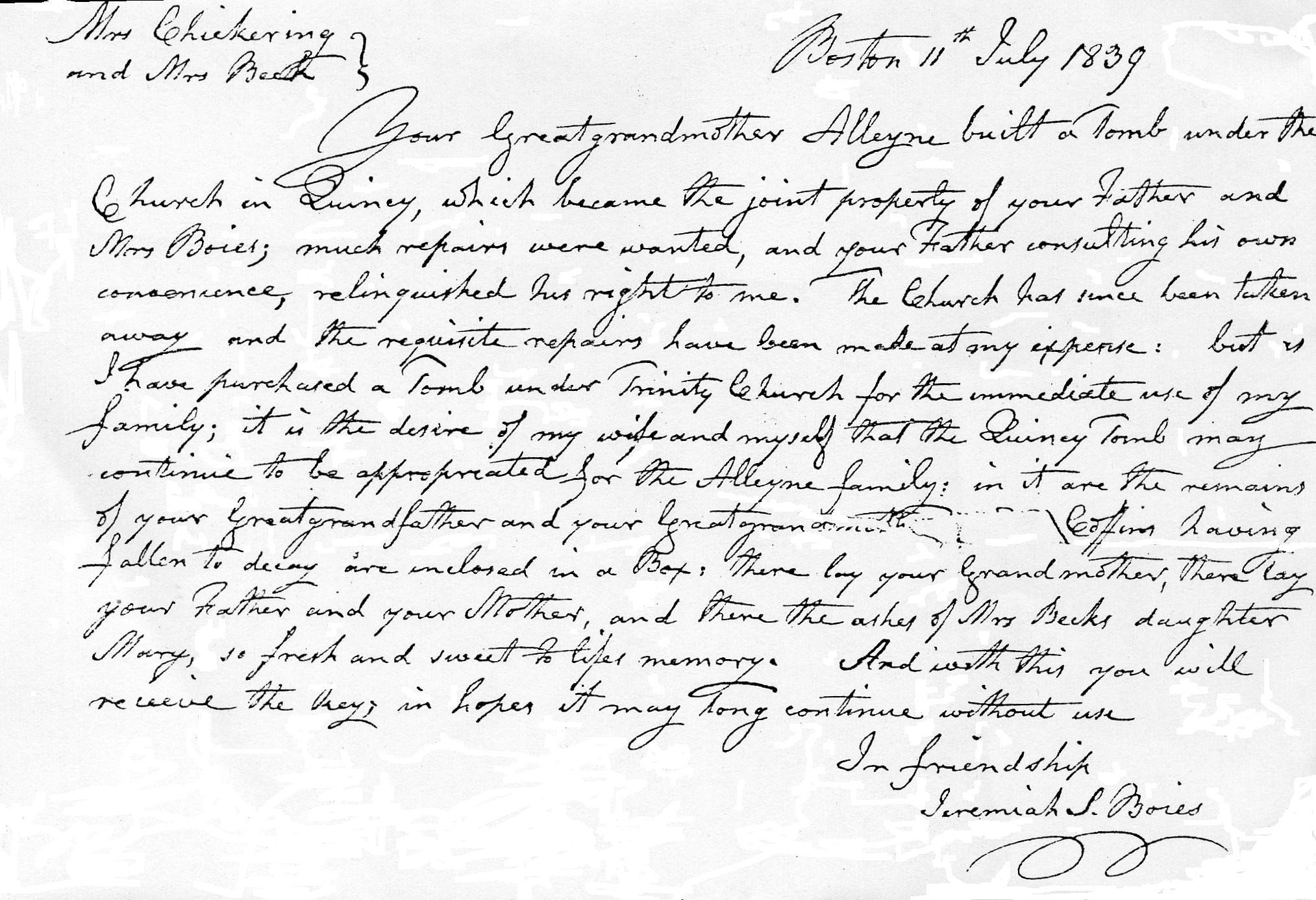
From this letter it can be seen that the following Alleynes are interred in the vault:
- Abel Alleyne (12)
- Mary Alleyne (Woodbridge), his wife
- Dorothy Harbin Alleyne (Forster), wife of Thomas Alleyne (18) and daughter-in-law of Abel and Mary
- Abel Alleyne (26)
- Anna Alleyne (Chase), wife of Abel
- Mary Beck, daughter of Sarah Hannah Boies Alleyne (26 iv) and Frederick Beck
Thomas was not interred here, as he died at sea.
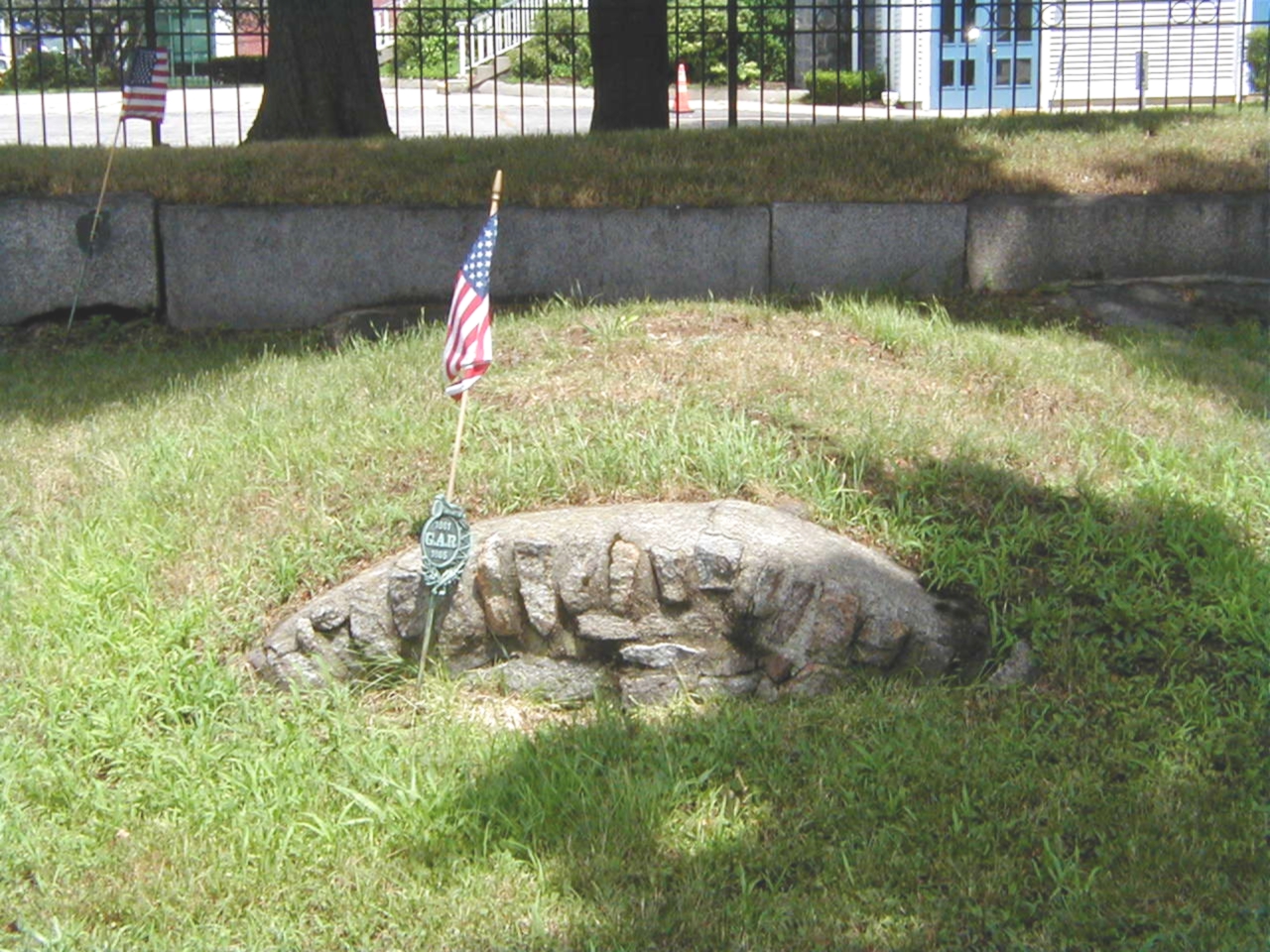
Below are photographs of the old cemetery of Christ Church Episcopal Church in Quincy, where the Alleyne family vault is located. The vault was one of two beneath the church. Today there is an open space where the church once stood, with only the two vaults within it. The Alleyne vault — bottom right — is unmarked, but Mr. Corey assured the author that it is the Alleyne vault.
The family Bible
Quincy Historical Society
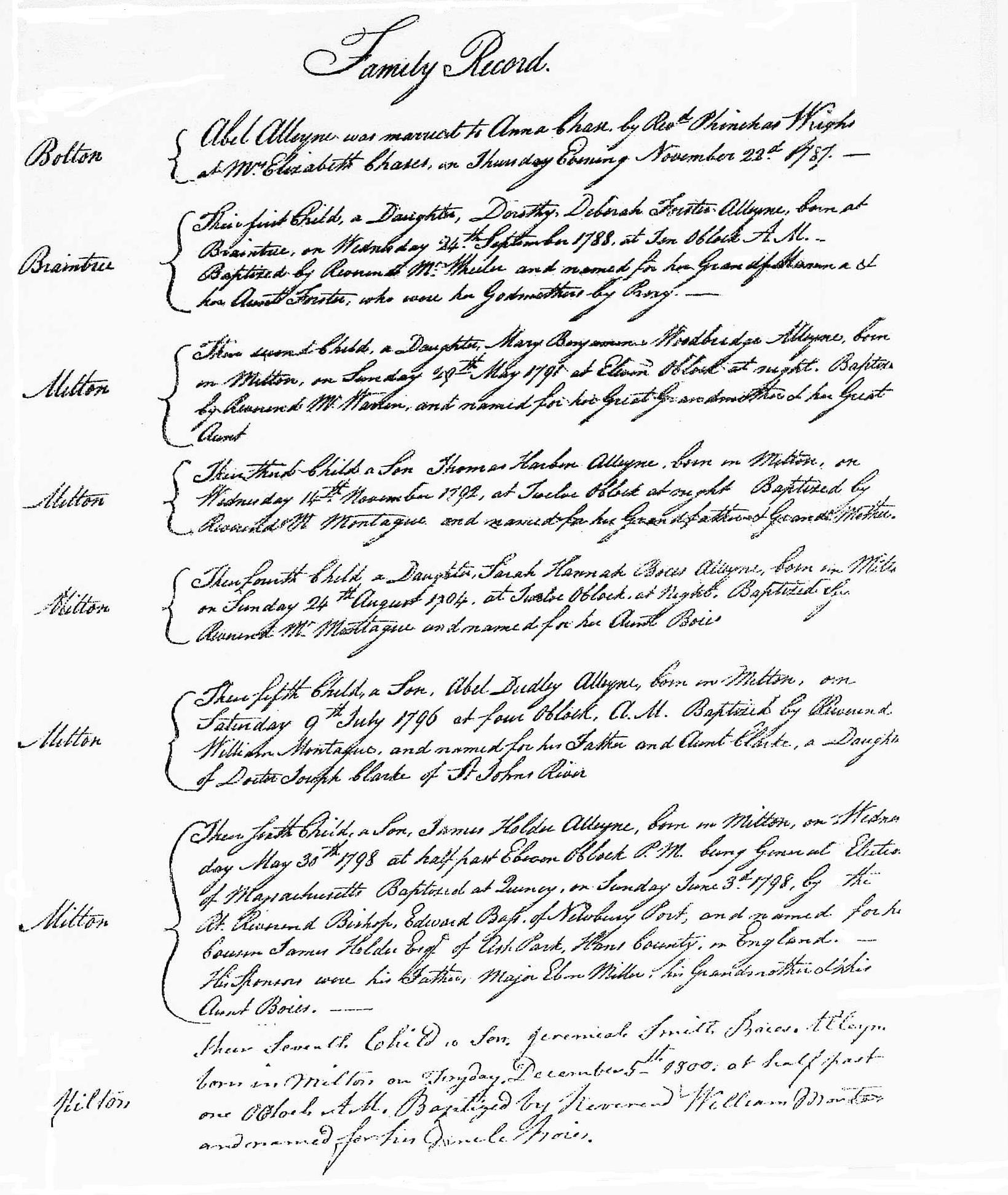
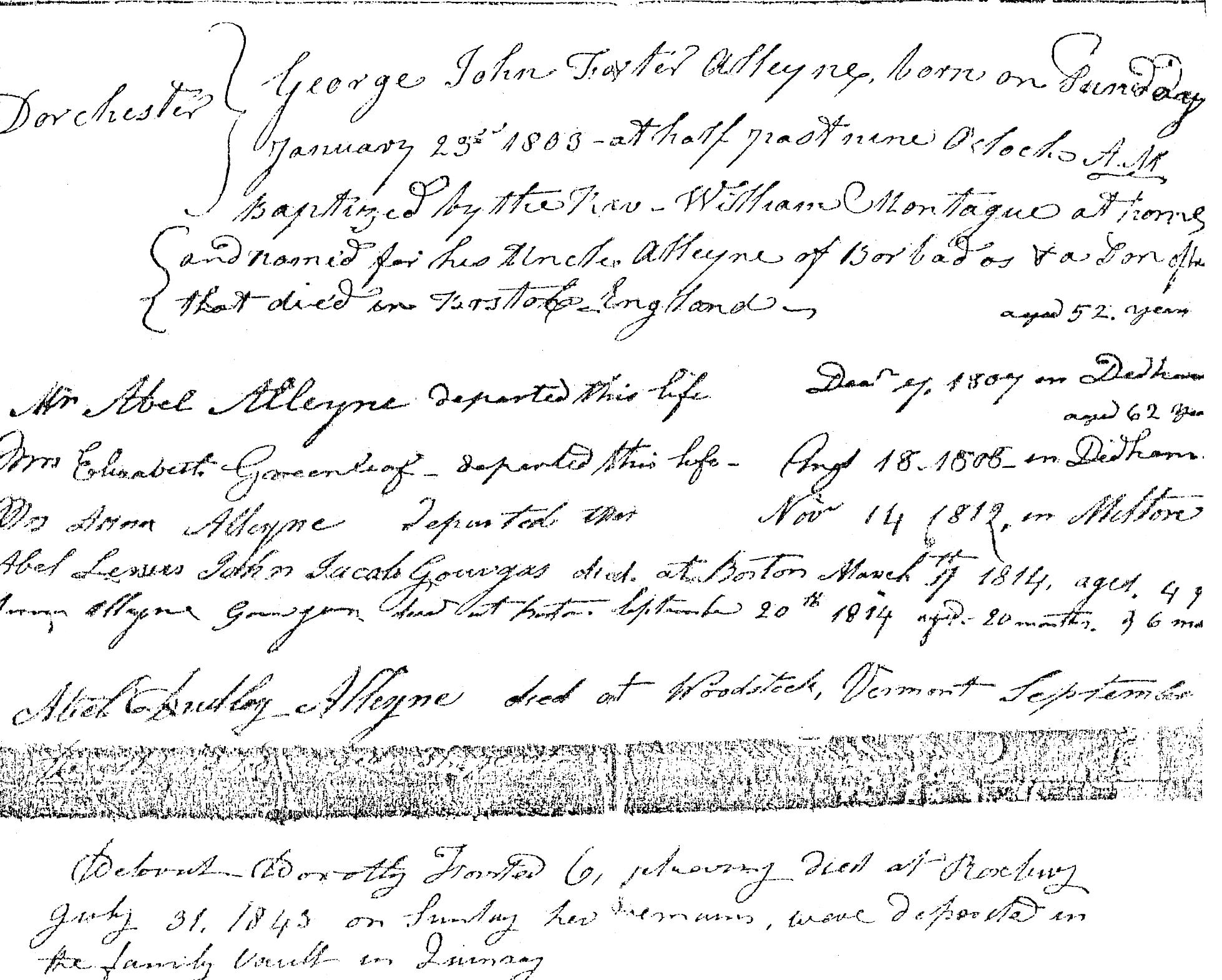
While in Quincy the author visited the Historical Society and was shown their Alleyne file. In it was a copy of two pages from the family Bible of Abel Alleyne (26), in his own hand, showing the names, birth dates and birthplaces of his children, and the person for whom each child was named. A second page carries seven death records.
Note that Deborah Dorothy Forster Alleyne (Chickering) — one of the addressees of the Jeremiah Boies letter above — was interred in the vault only four years later. It is also interesting that this document shows she was interred in the vault, while a gravestone bearing her name stands in Dedham (see Alleyne Graves).
The Dorothy Q. House
Butler Road, Quincy
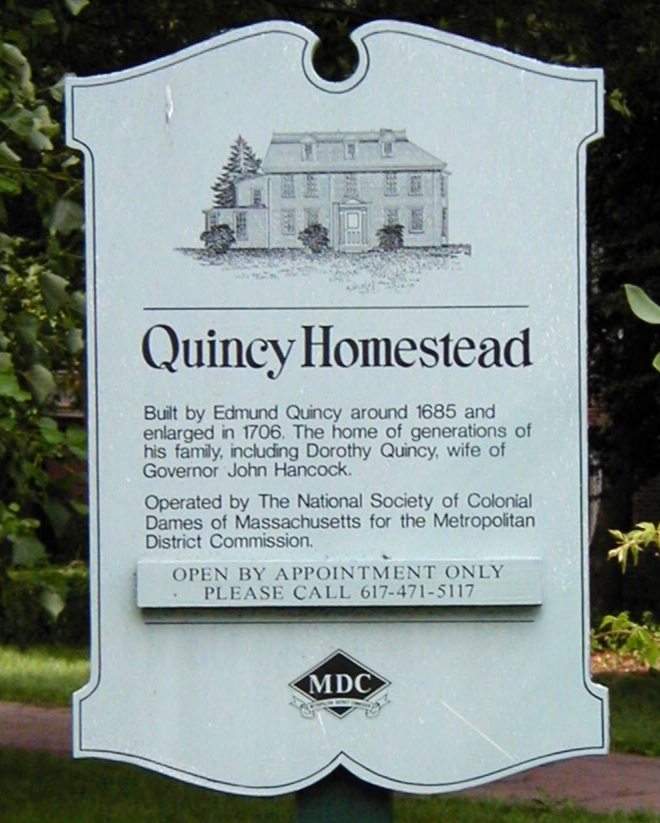
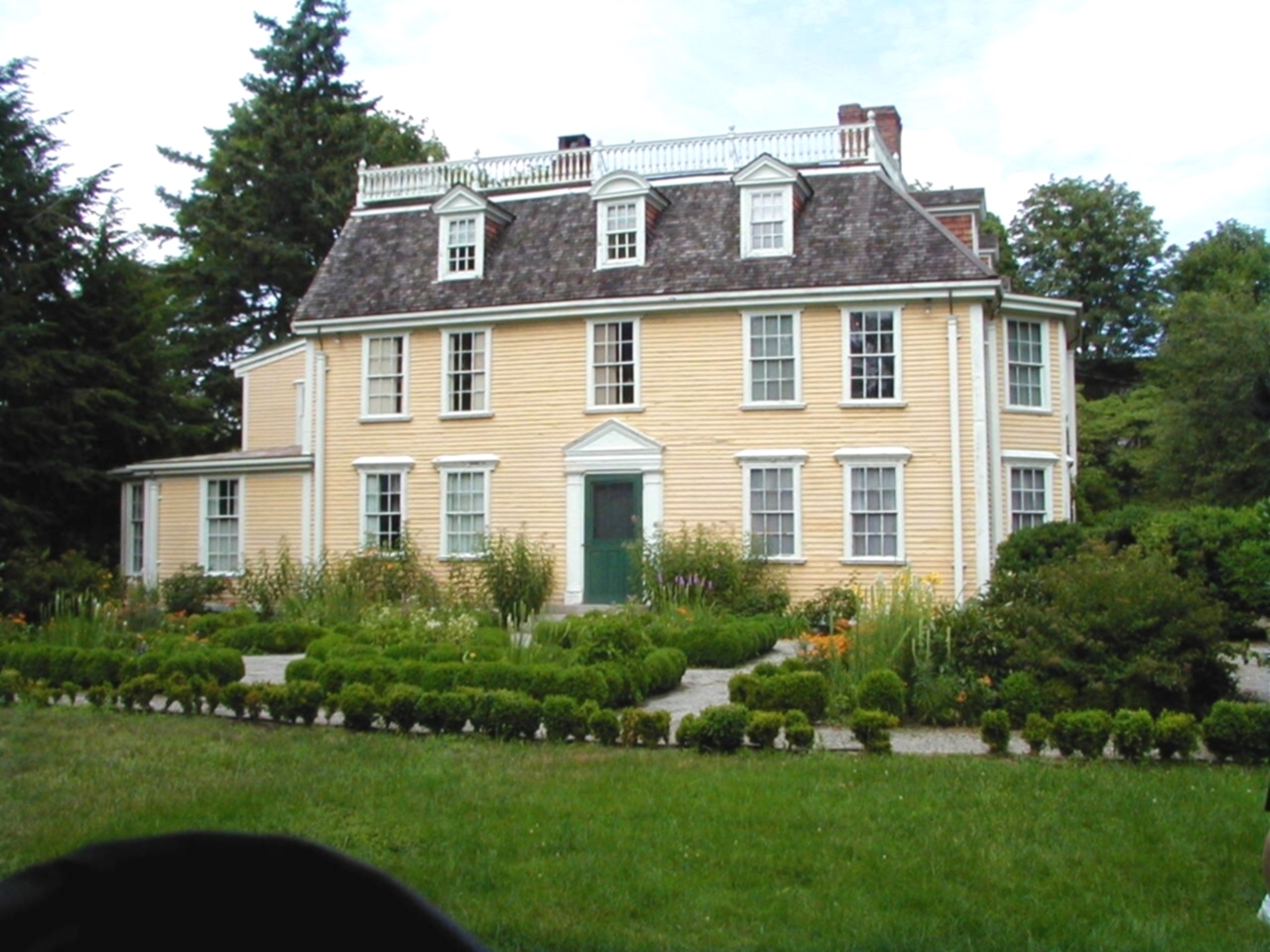
Also in Quincy, on Butler Road, stands the Dorothy Q. House, said to be the oldest house in New England. It was owned by the Quincy family and later by Dorothy Quincy. After her death in 1762 the house passed to a Mr. Bradford, and on 24 November 1769 he sold it to Mary Alleyne, then the widow of Abel Alleyne.
Abel, as noted, had left Barbados on his doctor's recommendation to seek a better climate in New England; he and Mary settled first in Milton and then in Braintree. Some time after his death, Mary purchased the house and 400 acres of land for £2,400 sterling and lived there with the family until she died. Her son Thomas sold the house and 258 acres to a Mr. Benjamin Beale on 1 December 1787 for £981 sterling. The house had only five owners before it was taken over by the Massachusetts Society of Colonial Dames, who run it as a museum today.
During the years Mary and Thomas owned the house, John Adams — later the second U.S. President — and his wife Abigail, herself a member of the Quincy family, lived both in Quincy and in Washington. Abigail very much wanted to buy the house back into her family. The Massachusetts Historical Society holds a number of letters between Abigail and John Adams, available online, showing that the Alleynes and the Adamses were acquaintances who visited one another and took tea together.
In March 1772 Abigail wrote to John Adams that Mr. Alleyne had put the house up for sale, but that owing to the price:
It is a place I should be fond of, but know it must still be my castle in the air.
The house never did pass back into the Quincy family.
The return to Barbados
1802 and after
From these records and signs, graves and churches, it is plain that the Alleyne family lived in Milton, Dedham and Quincy (Braintree), and left their mark there.
The family remained in Quincy for three generations, until first John Forster Alleyne (27) returned to Barbados, and then in 1802 Thomas Harbin Alleyne (31) was sent back by his parents at the age of ten. Thomas Harbin lived at Porters plantation with his uncle John Forster Alleyne until he was old enough to fend for himself.
Thomas Harbin was the eldest son of Abel and Anna, who were loyalists in a new republic after the United States won independence. It is the belief of the author that Abel and Anna did not want young Thomas Harbin to grow up in the new republic, and so sent him back to Barbados.
As a result of John Forster and Thomas Harbin returning, the Alleyne family continued on the island — and most Alleynes today can trace their line back to them.
Numbers shown after names in the text refer to the numbers and individuals given in the BMHS articles Alleyne of Barbados by Louise Allen. These articles form part of Genealogies of Barbados Families, from Caribbeana and the Barbados Museum and Historical Society, compiled by James C. Brandow.