
Rev. Richard Alleyn, D.D.
Richard Alleyne was born in 1572 (thought to be 9 November) in Skillington, Lincolnshire, England, and died at Stowting, Kent, on 25 October 1651 at the age of 79. He married Christian Smythe (1576, Stowting, Kent, England – 1640, Canterbury, Kent, England) on 19 May 1595 at Stowting, Kent.
Richard had eight children, six boys and two girls. His third child was Reynold Alleyne, who left for Barbados.
He studied to become a Doctor of Divinity and was Rector of St. Mildred's, Canterbury. He was appointed Rector of St. Mary's at Stowting, Kent, on 6 May 1605.
Col. Reynold Alleyne
Reynold was born in August 1609 in Stowting, Kent, and died 17 December 1651 in Barbados at the age of 42. He married Mary Skeet of St. Philip, Barbados.
Reynold was among the first settlers to arrive in Barbados. He is first mentioned in the records in 1630, serving as one of the Councillors in the government under Capt. Henry Hawley. He made a trip back to England but returned to Barbados in 1639. He was a cotton and tobacco trader for a London merchant, and also bought and sold land in St. Philip and Christ Church parishes.
At this time the struggle between Royalists and Roundheads was under way in England, and both groups had supporters in Barbados. Reynold Alleyne was on the side of the Commonwealth, and when matters came to a head in 1650 he requested help from England to overthrow the Governor, Lord Willoughby, and his Royalist friends.
A fleet was sent from England and arrived in Barbados on 15 October 1651, though a landing was not attempted until 7 December. In the early hours of that morning, under cover of darkness, a force of four to five hundred men under Col. Alleyne's command went ashore. They were met by twelve hundred men on horse and foot, but managed to gain a foothold on the island. Col. Alleyne was wounded by a musket shot and died ten days later. The dispute was eventually settled by treaty, ratified in August 1652.
Reynold had five children, three boys and two girls. His first son was Abel Alleyne.
Abel Alleyne
Abel's date of birth is not known, but was probably in the early 1640s, which would have made him about 60 when he died on 12 June 1706. He was buried in St. James, Barbados. He married Elizabeth Denzy on 12 January 1665; Elizabeth was born in 1652 and died 25 September 1705 in St. James.
Abel owned a sizable property known as Mount Alleyne in the seventeenth and eighteenth centuries, believed to have been situated just east of Apes Hill in the parishes of St. Andrew and St. Joseph.
In 1683 he was an assistant Judge of the Court of Common Pleas for the precinct of St. Andrew and St. Joseph. He was a member of the Assembly for St. Andrew in 1684–85 and for St. James from 1686 to 1701. He held the rank of Colonel and was Commander of the Leeward Regiment of Foot.
Abel had eight children, three boys and five girls. His second son was Reynold Alleyne.
Reynold Alleyne
Reynold was born in 1672 and buried 2 October 1722 at St. James, Barbados, at the age of 50. He married Elizabeth Isabella Gay, daughter of John Gay of Dymocks, Barbados.
He lived at Four Hills and was a member of the Assembly for St. Andrew. He was also Chief Justice of the Bridge Court of Barbados. His younger brother Benjamin left him Mount Standfast, St. James, on his death.
Reynold had eight children, four sons and four daughters. His eldest son was John Alleyne and his second son was Abel Alleyne.
John Alleyne
John was born on 23 December 1695 in Covent Garden, London. He married Mary Terrill, daughter of William Terrill of Cabbage Tree (later Alleynedale Hall), on 24 November 1718 at Covent Garden.
He was educated at Magdalen College, Oxford. John inherited the seat at Four Hills from his father but chose not to enter public life.
John died in April 1730 in Bath, England, at the age of 35, and was buried at Bath Abbey on 20 April of that year. John and Mary had five children, one son and four daughters. His son was Sir John Gay Alleyne.
Abel Alleyne
Abel was born 16 February 1699 in St. James, Barbados, and died in 1747 in Quincy, Massachusetts, at the age of 48. He is buried in the family vault at Christ Church Episcopal Church there.
He married Mary Woodbridge, daughter of Dudley Woodbridge of "Kensington", England, and "Mount Standfast", Barbados, on 16 July 1719 at St. Philip. Mary died around 1781.
Abel was advised by his doctor to move to a cooler climate because of his health, and so in 1739 went to the Boston area — Braintree, Massachusetts. Abel had twelve children, seven boys and five girls. His eighth child was Thomas Alleyne.
After his death, his wife Mary purchased a house in Braintree once owned by Edmund Quincy. The family lived there for years, and it was sold after Mary's death. The house has had only six owners in its history and is a museum today, operated by the Massachusetts Society of Colonial Dames.

Sir John Gay Alleyne, 1st Bart.
Sir John Gay Alleyne was born on 28 April 1724 in St. James, Barbados, the second son of John and Mary (née Terrill) Alleyne of Four Hills, St. Peter. He inherited his father's estate at the age of six, including Four Hills and Bawdens in St. Andrew. It is believed he was educated at Codrington Grammar School, now The Lodge School.
On 19 October 1746 at St. James Church he married Christian Dottin, whose father Joseph Dottin owned St. Nicholas and Black Rock estates. They lived at St. Nicholas Abbey. Their only son, John Gay Jr., was born in 1747 but died young.
In 1747 Sir John was asked by John Sober, a cousin of his wife, to manage Mount Gilboa estate in St. Lucy, and was made "Attorney" there. Mount Gilboa was later renamed Mount Gay in his honour — the site of the famous rum distillery.
He was elected to the House of Assembly in 1757 at the age of 33, and in 1767 was unanimously elected Speaker of the House, a position he held until 1797 with only one break in 1771–72, when he travelled to England for health reasons. On 8 April 1769 he was made a Baronet of Great Britain by King George III, with the motto Non Tua Te Sed Publica Vota — not your wishes but those of the public.
During his time in England, on 2 June 1771, he fought a duel with Henry George Frere, also of Barbados, in Hyde Park, London, taking offence at an article Frere had written which was said to be misleading about the island's affairs. Both fired and both missed; honour satisfied, the affair ended amicably.
As Speaker he was the first to claim members' parliamentary privileges. He opposed illegal higher taxation of the people of Barbados by the then governor, and successfully petitioned the King to have such taxes abolished.
Christian died in 1782. On 29 June 1786 Sir John married his cousin Jane Abel Alleyne, daughter of Abel Alleyne of Mount Standfast. He was 62; she was 21. They lived at St. Nicholas Abbey and had seven children — two sons, John Gay Newton and Reynold Abel, and five daughters. The eldest boy died in 1800 at Eton College aged 13, and Jane died later the same year. A plaque on the wall of St. James Church is dedicated to his wives and son.
Around 1783 Sir John founded a school for poor boys in St. Andrew, originally called The Seminary and renamed The Alleyne School in 1785. Its motto is Allis Non Sibi — for others, not oneself. In his will he left a legacy of £60 per annum for the school, funded by the estates of Bawdens and River. The school is still in operation today and is co-educational.
Sir John died on 7 December 1801 and is said to be buried at St. James Church. He disapproved of the system of slavery, which he felt was an unhappy sight. The historian Poyer, in his History of Barbados, called him "the venerable patriot… uniformly the noble, erect and zealous assertor of the rights of people," and he was considered the most distinguished figure in the public life of Barbados during the eighteenth century. He was succeeded by his son Sir Reynold Abel Alleyne, 2nd Baronet.
Thomas Alleyne
Thomas was born 28 August 1733 in Barbados and died 9 August 1787, either at sea or in the Carolinas, at the age of 54.
He married Dorothy Harbin Forster, daughter of John Forster of Forster Hall, Barbados, on 2 January 1754. Dorothy was born in 1735 and died 14 November 1814 in Dedham, Massachusetts. She is buried in the family plot at the Quincy church. She is said to have been an extremely beautiful woman and was known as one of the "Barbados Beauties".
Thomas had three children, all boys. His eldest was Abel Alleyne.
Abel Alleyne
Abel was born 19 May 1757 in Salem, Massachusetts, and died 7 December 1807, aged 50. He was buried at the Episcopal Church in Dedham, Massachusetts.
He married Anne Chase of Bolton, Massachusetts, on 22 November 1787. Anne was born 10 August 1765 and died 6 November 1812.
Abel owned a paper mill on the Neponset River in Mattapan, Massachusetts, but lived in Milton. He was a Warden of St. Peter's Church in Dedham, and when it was decided that the Wardens had to live in Dedham, he moved there.
Abel had eight children, five boys and three girls. His third child was Thomas Harbin Alleyne.
Hon. John Forster Alleyne
John was born in Braintree, now Quincy, Massachusetts, on 22 April 1762. At an early age he was adopted by his mother's sister, Mrs. Sarah Forster Osborne, in Barbados. He married Elizabeth Gibbes Willing, daughter of Charles Willing of Philadelphia, on 10 June 1782.
John inherited Porters Plantation, St. James, in 1795 while living in England, but moved back to Barbados and lived there until his death, when it passed to his son Charles Thomas Alleyne. He also owned Sandy Lane, Kensington and Mount Alleyne plantations.
He was appointed Chief Justice of the Court of Common Pleas for St. James on 31 July 1798, where he served for many years. He was a member of His Majesty's Council for Barbados and later became President of the Council. During his presidency he twice served as Governor in the absence of Lord Combermere.
John died 29 September 1823 and was buried in the family plot at St. James Parish Church. He and Elizabeth had fifteen children.

Sir Reynold Abel Alleyne, 2nd Bart.
Reynold Abel Alleyne was born on 18 June 1789 at St. James, Barbados, and was educated at Eton. He married Rebecca Olton of Barbados at St. Philip's Parish Church on 20 September 1810.
He succeeded to the baronetcy at the age of twelve. He was a member for Barbados for thirty years and a Colonel of the Militia. He owned Bawdens, The River and Cabbage Tree estates, and resided at Cabbage Tree Hall with his family, renaming it Alleynedale Hall.
Sir Reynold and Rebecca had nine children; his eldest son was John Gay Newton Alleyne. Sir Reynold died at Nuttall House, Barton-under-Needwood, England, and was buried in the churchyard there.
Thomas Harbin Alleyne
Thomas was born 14 November 1792 at noon in Milton, Massachusetts, and died 25 June 1839 at Alleyne Cottage, St. James, Barbados, aged 46. He married Elizabeth Frere Williams, daughter of Robert Williams of Bristol, England.
Thomas left the United States in December 1802, at the age of ten, for Barbados. He was a planter and later became Officer of Customs in Barbados.
He lived at Alleyne Cottage, near St. James Church in Holetown and believed to have been on the Porters property. Although the house withstood the hurricane of 1831 without damage, it has since been demolished.
Thomas had twelve children, seven boys and five girls. His sixth child was Frederick William Alleyne.

Sir John Gay Newton Alleyne, 3rd Bart.
John Gay Newton Alleyne was born in Barbados on 8 September 1820. He attended Harrow School in England and later Bonn University, graduating in 1843. He served as Warden of Dulwich College from 1843 to 1851, then returned to Barbados where he worked briefly in the sugar industry. He returned to England in 1852 and joined the Butterley Iron Works as an engineer, where he remained many years. He succeeded as 3rd Baronet on 14 February 1870 at the death of his father.
At Butterley he took out several patents, including a mechanical traveller for moving ingots in front of and behind rolling mills; the two-high rolling mill, allowing material to pass back and forth between the rolls; and the wrought iron girder for floors. He is credited with the invention of the first "H" section beam, made by welding two "T" sections together — significantly stronger than the T beam, and allowing far greater spans.
In 1868 Sir John designed the roof of St. Pancras Railway Station, London, at the time the largest span ever built at 240 feet. It was said that the manufacture and erection of this awe-inspiring structure was a tribute to his abilities. He also designed the railway bridge over the river Maas at Dordrecht, Holland.
He is further credited with devising a method for determining small amounts of phosphorus in steel using a spectroscope. Sir John was President of the Iron and Steel Institute and a member of the Institute of Mechanical Engineers. An accomplished metal worker, he kept a private shop at his home, Chevin House in Derbyshire, and as a keen astronomer built his own observatory there. He served as a county Magistrate and was an alderman in his district when County Councils were first established.
Sir John died on 20 February 1912, aged 91, in Falmouth, Cornwall, England.


George Henry Alleyne
George was born on 9 August 1821 at St. Michael, Barbados. He attended school in Barbados but received his degree from Cambridge University. He married Elizabeth Toppin, daughter of John Toppin of Risk Plantation, at St. John Parish Church on 19 August 1843.
George formed a company in Bridgetown named Alleyne & Company, a dry goods store which was also the agency for the Liverpool, London & Globe Insurance Company. In the 1860s he formed a partnership with Robert Arthur, his son-in-law. Alleyne & Arthur was a dry goods store and later a grocery.
In the early 1900s Alleyne Arthur began producing rum under two labels — Old Brigand, and Alleyne Arthur's Special Old Barbados Rum — and continued until 1993, when the firm was taken over by Seale & Company.
George died on 15 December 1884 in London, England. He and Elizabeth had five children.

Frederick William Alleyne
Frederick was born in 1825 at Porters, Barbados, and died 25 June 1910 at St. Michael, Barbados, at the age of 85. He married Mary Sophia Earle on 9 April 1845.
Frederick was a planter and lived at Carmichael's, St. George, Barbados. He had eleven children, five boys and six girls. His fourth child was Innes Milton Alleyne.

Henry Alleyne, Sr.
Henry was born on 2 September 1849 at Hothersal, St. John. He was the second son of Robert Harbin Alleyne, Sr.
He married Jane Harriet Laurie Watson (née King) on 9 February 1875, daughter of James W. King and widow of John Henry Watson. She died of yellow fever on 10 March 1909.
Henry was a sugar planter and lived at Friendly Hall, St. Lucy, with his wife and eldest son. He and Jane had five children: Henry Jr., James Douglas, Charles Beresford, Helen Marian and Florence Bouverie.
Henry died in 1938 at Bromefield, St. Lucy, and was buried in Westbury Cemetery, Bridgetown, Barbados.

Rev. Innes Milton Alleyne
Innes was born 26 November 1851 at Holetown, Barbados, and died 17 May 1930 in Christ Church at the age of 78. He married Laura Perryman (1854–1933) on 14 June 1877.
Innes was educated at The Lodge School and Codrington College in Barbados. He was ordained Deacon in 1875 and Priest in 1877. He was appointed Vicar of St. Saviour's in 1880 and of All Saints in 1881, where he stayed for seventeen years. In 1898 he was appointed Rector of St. Andrew's, where he served twenty-seven years until his retirement.
Innes had seven children, four sons and three daughters. His second son was Rev. Herbert Milton Decourcy Alleyne and his third son was Francis Milton Osborne Alleyne.

Edward Wentworth Fisher Holder Alleyne
Edward was born 30 March 1852 in London, England, the eldest son of James Holder Alleyne. He was at Eton and then attended Sandhurst, and held a commission in the 12th Regiment of the Royal Lancers.
He lived at Taunton, Somerset, with an income of £1,700 per annum and a stable of seventeen horses. He married Emily Alicia Katherine, youngest daughter of the Rev. John Dupre Addison, Vicar of Weymouth. They had three children: Audley Helen Caroline Wentworth Alleyne, and twins Maj. Wentworth Holder Alleyne and Dr. Evelyn Addison Wentworth Alleyne.
In December 1897 Edward joined Maj. Helpman's expedition travelling from Edmonton to the Klondike. Waiting for a train in Winnipeg which had become stuck for several hours in the snow, he caught a chill which became chronic pneumonia. He arrived in Edmonton to meet the expedition and was taken immediately to the general hospital, where he died on Monday 27 December 1897.
His funeral was held two days later, on Wednesday 29 December, with full military and Masonic honours, the procession escorted by the Mounted Police. Edward was buried in Edmonton Cemetery.

Henry Alleyne, Jr.
Henry was born on 22 March 1876 at Saltram, St. Joseph. There is some discrepancy over the exact date: his gravestone shows 8 April 1876, but this is supposed to be the date he was baptised.
He was the eldest son of Henry and Jane (née King). On 13 April 1904 he married Rosalie Estelle Ann Deane, daughter of Thomas Edward Norton Deane, manager of St. Nicholas Plantation in St. Peter, and his wife Mary Adelaide Deane (née Yearwood). They had three children: Theodore Woodley, John Reynold and Marion Elsie.
Henry was educated at The Lodge School and Harrison College in Barbados and was a sugar planter, owner of Bromefield, Hannays and Friendly Hall plantations in St. Lucy.
He represented the parish of St. Lucy in the House of Assembly from 1929 to 1937 and served as Chairman of Committees of the House from 1934 to 1937. He was a Justice of the Peace and lived at Friendly Hall.
Henry died on 15 April 1942 at Friendly Hall, St. Lucy, and was buried in the family plot at St. Lucy Parish Church.

Dr. Francis Milton Osborne Alleyne
Francis was born 7 November 1884 and died aged 83 on 3 April 1967 at his home at Bush Hall, St. Michael, Barbados. He married Mabel Louise Greaves Mahon on 24 April 1907 at the Church of the Redeemer in New York City. Mabel was born 27 January 1888 and died in July 1983 in Barbados.
Frank studied dentistry at the Brooklyn School of Dental Surgery in New York and returned to practise in Bridgetown, Barbados. He had a private practice attached to the family home at Bush Hall, and was also visiting dentist at the government elementary schools and prisons for almost twenty-three years.
Frank and Mabel had seven children: four daughters — Agatha, Marjorie, Muriel and Elaine — and three sons, Herbert, Campbell and Colin. Mabel survived him and lived at The Crane, St. Philip, until her death at the age of 96.
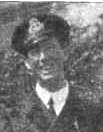
Cdr. Victor Percy Alleyne, O.B.E.
Victor was born in Windsor, Berkshire, in 1887, the only son of Walter Percy Alleyne. At the age of 20 he joined the Royal Navy, where he served until 1927, retiring as a Lieutenant Commander. In 1929 he married Elizabeth Wace at Shawnigan Lake, British Columbia, Canada.
In 1939 he rejoined the Navy and was seconded to the Royal Canadian Navy in Halifax, Nova Scotia. Victor led the first convoy across the Atlantic in 1939 and was then appointed Commodore of Convoys. He achieved the rank of acting captain in 1941.
In 1943 he was awarded the O.B.E. by King George VI for his zeal and devotion as Commodore of Convoys, and had an island off the coast of British Columbia named for him.
Victor retired in 1944 due to poor health and lived the rest of his life in Victoria, B.C. He died on 5 May 1952. He and Elizabeth had no children.

Theodore Woodley Alleyne
Theodore was born on 14 December 1908 at Hannays, St. Lucy, the eldest son of Henry Alleyne and Rosalie (née Deane) of Friendly Hall plantation. He was educated at The Lodge School, where he boarded and was an active member of the school cricket team and Cadet Corps.
On 19 August 1936 he married Elsa, daughter of Clairmont and Evelyn Thompson of Grenada, and they had five children: Betty, Robert, Ann, Frances and Philip.
On leaving school, Theo joined Barclays Bank D.C.&O. in Bridgetown as a trainee accountant and was eventually transferred to the branch in Grenada. He later moved to Geo. F. Huggins. While in Grenada he played cricket for the Grenada Cricket Club, becoming one of their successful captains and winning an inter-island cup one year. It was during this time that he met his wife; soon after marrying they returned to Barbados and lived at Bromefield, St. Lucy, which he managed for his father.
Following his father's death, Bromefield was sold, and in 1945 the family moved to Grenada and lived at Woodlands, where he was General Manager of The Grenada Sugar Factory Ltd. After six years his family bought Newcastle Plantation in St. John and he returned to Barbados to manage it. When Newcastle was sold he acquired Gibbes Plantation in St. Peter and ran it until he retired. He then worked part-time for the Parris Tractor Co. and moved to a house at Black Bess, St. Peter.
Theo was a life member of The Lodge School Old Boys Association and Secretary/Treasurer of the School Governing Body. He was President of the Leeward Cricket Club and for a while served on the committee of the Barbados Cricket Board of Control. A keen sportsman, apart from cricket he enjoyed shooting and sea fishing. Although he might on occasion have appeared hot-tempered, Theo was a fair, impartial and forgiving man.
He died of a heart attack on 14 February 1982 and is buried in the family plot at St. Lucy Parish Church, Barbados.

Campbell Gay Alleyne
Campbell was born 27 February 1915 at Cave Hill, St. Michael, Barbados. He married Rose Josephine "Fita" Tardieu on 21 June 1941 at St. Patrick's Church, Port-of-Spain, Trinidad. Fita was born 26 November 1916 in Port-of-Spain.
Campbell attended Harrison College and served his apprenticeship at the Barbados Foundry. He went to Trinidad in 1936 at the age of twenty-one and started as a trainee with Trinidad Leaseholds Limited, later Texaco Trinidad Inc., at their refinery at Pointe-à-Pierre. He retired in 1978 as Refinery Engineer.
Campbell had many interests: he was a HAM radio operator and a gardener. He and Fita moved to St. Lucia on retirement, where Campbell died in 1997 at the age of 82. He was buried in the family plot at St. George Parish Church in Barbados, along with his parents, two brothers, and later his wife Fita.
Campbell and Fita had seven children: five sons — Alvin, Wayne, Dale, Dean and Colin — and two daughters, Bonnie and Linda.